
NaviNet Eligibility & Benefits Redesign
From Legacy Model to NaviNet Open
As an organization prioritizing value-based care, your ability to communicate across a flexible, extensible platform is critical. NaviNet Open is one of America’s leading payer-provider collaboration platforms, facilitating provider engagement and generating trustworthy, actionable data throughout the care delivery continuum.
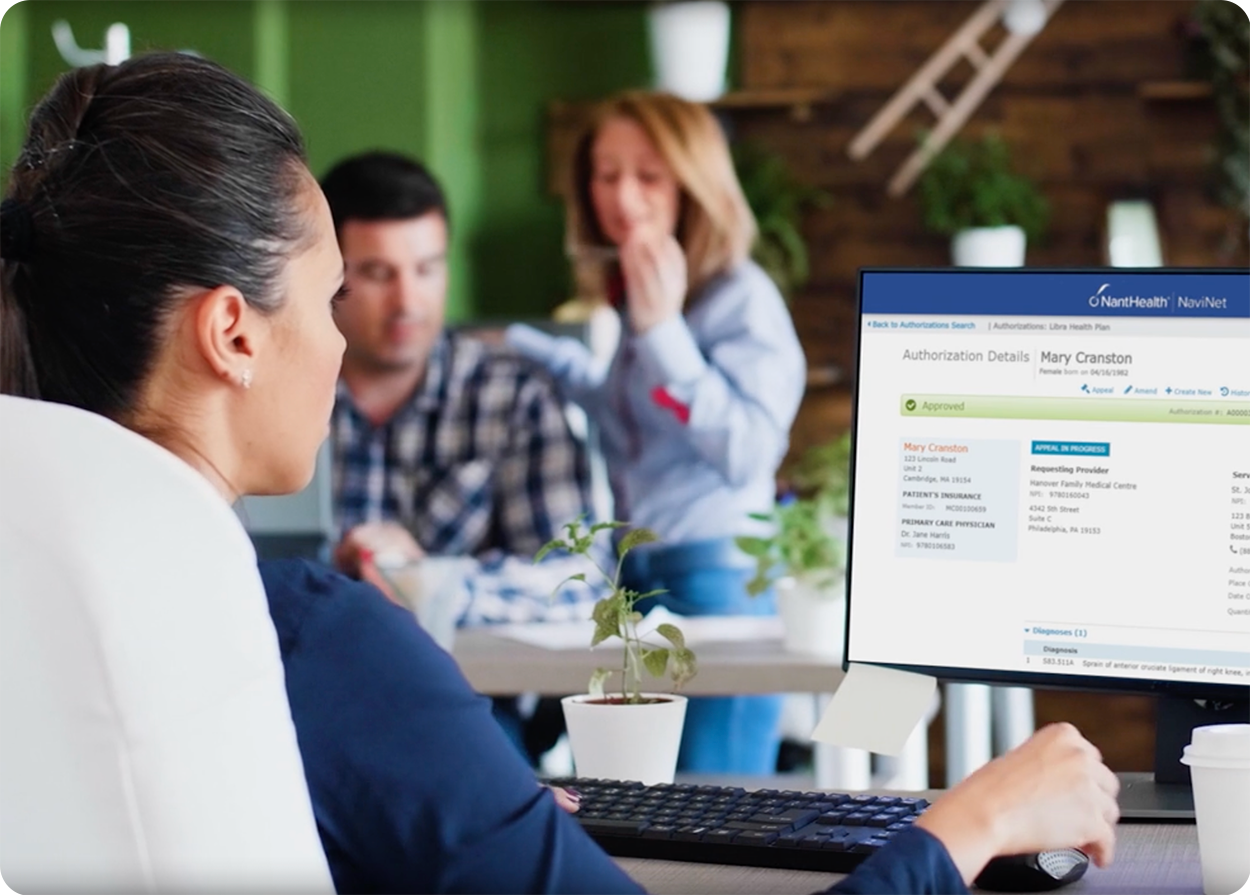
A secure multi-payer platform, NaviNet Open enhances communication, boosts operating efficiency, cuts costs, and improves provider satisfaction. It lets payers and providers exchange vital administrative, financial, and clinical information in real time.
Since it was founded in 1997, NaviNet has traditionally been a professional services organization that created custom portals for each health plan client. As of 2020, the NaviNet portal has been transformed into a fully redesigned unified SAAS product.
Tasks:
UX Design, Accessibility Design, Information Architecture, User Testing, Personas + User Journeys
Led accessibility-grounded redesign of NaviNet's core workflows; post-launch analytics confirmed measurable improvements in task completion and a documented reduction in support volume.
Countless Research Sessions
In order to navigate a product organization through this massive transformation, conducting remote/in-person user testing sessions, A/B testing, surveys, focus group discussions, accessibility sessions, and ethnographic field studies allowed us to understand user needs and behaviors while maintaining a tight collaboration between product design and product management.
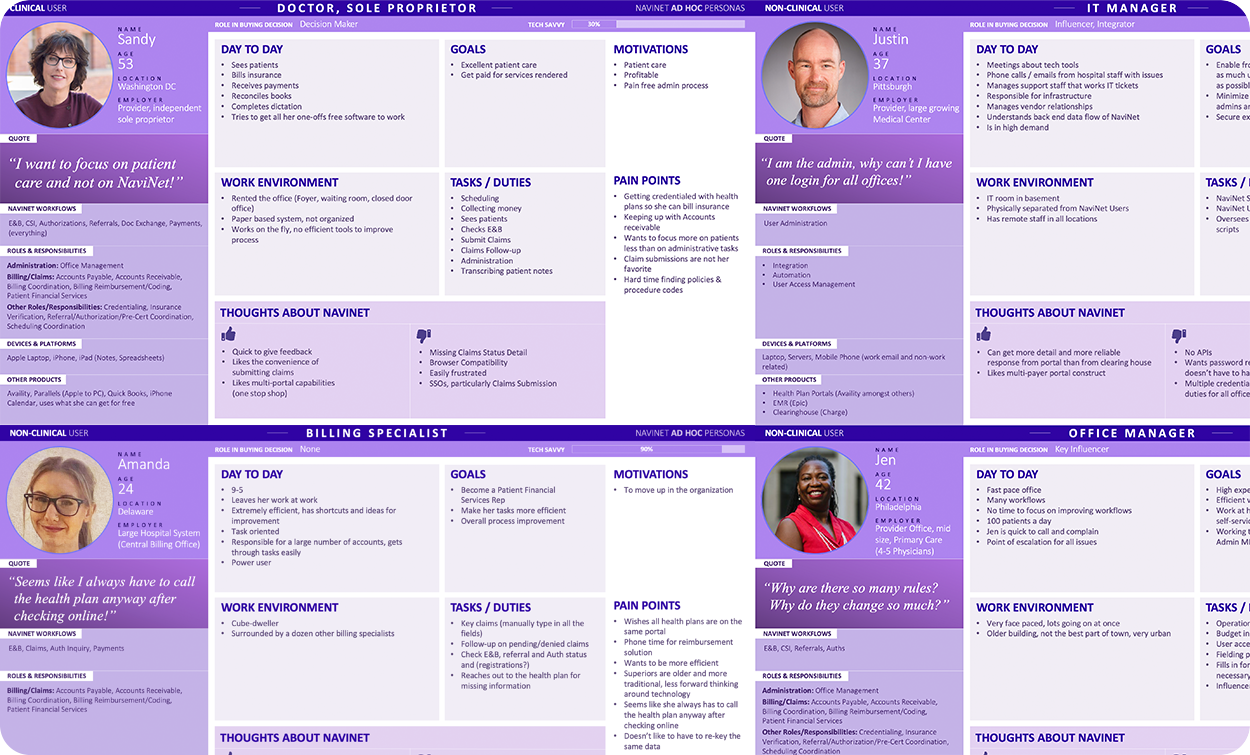
Updated Personas
The initial sets of personas needed revisiting. First, I conducted ad hoc persona sessions to engage stakeholders in finding common ground and agreeing on roles to focus on. The resulting ad hoc persona sketches gave us enough input in recruiting participants for ethnographic field studies. These studies were conducted in Pennsylvania, Delaware, and New Jersey. I conducted some studies and supervised the research data analysis; personas were created and shared with the rest of the organization on NantHealth’s SharePoint site and in several vision and user journey workshops I conducted.
The Design System
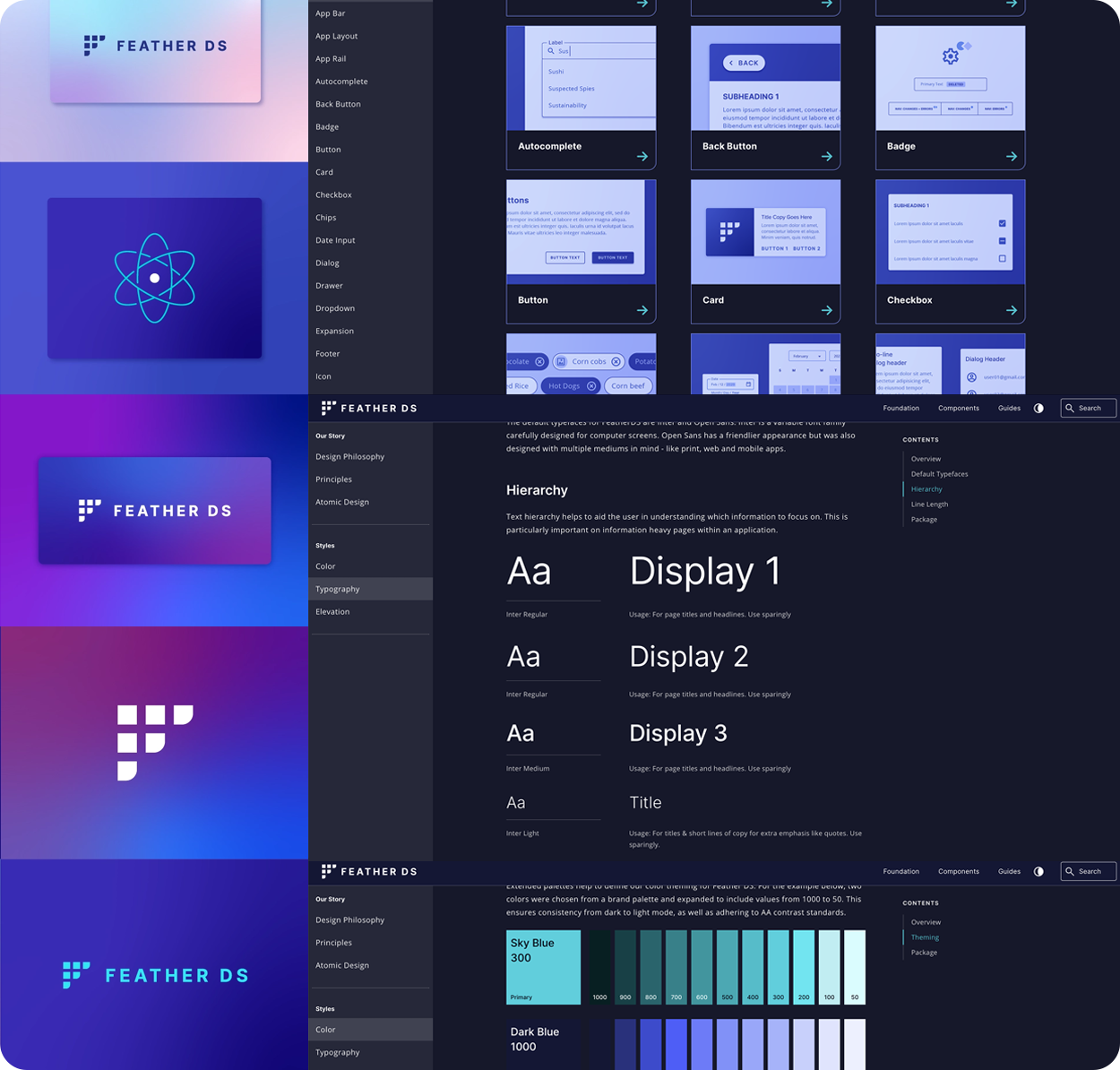
Feather DS started as an in-house design system tailored toward the goals of NantHealth and its various products. It places accessibility at the center of the design system experience. The plan was then shared with the healthcare community as an open-source design system. The system's primary goal is to provide the best possible experience to the broadest possible audience (https://feather.nanthealth.com).
I created components/organisms, participated in weekly design system sessions, guided and performed user testing of patterns, led accessibility sessions, and researched/created design pattern documentation.
The Redesign
These screens focus on the Eligibility and Benefits section. However, the redesign efforts affected the entire product suite of NaviNet Open.
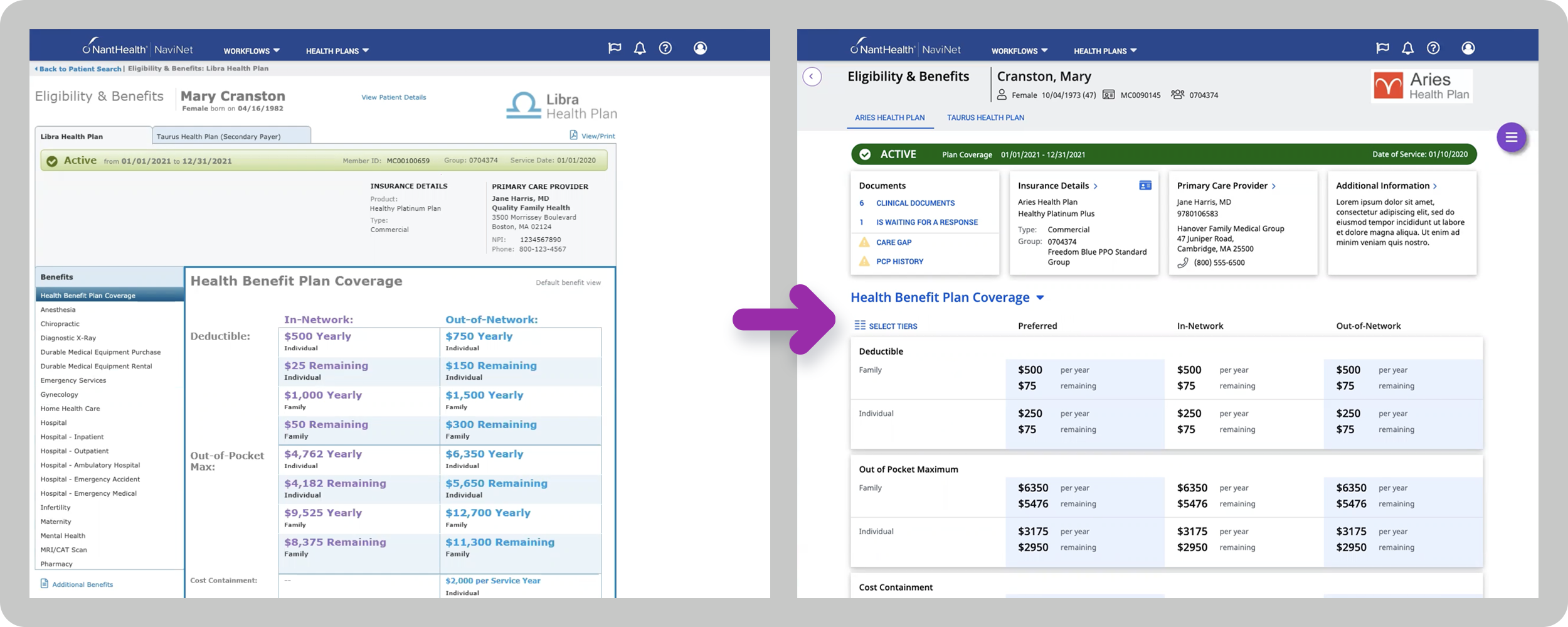
The left side shows the legacy model’s design of the E&B section of NaviNet, and the right shows the redesigned version. The legacy version had apparent usability issues addressed in the redesigned version. Users found all necessary data points in our testing sessions and easily navigated the redesign. Once implemented, the number of customer service calls on redesigned problem areas was lowered to roughly 60%, and analytics data showed improvements in user behavior as expected.
A large view of the ‘Before:’
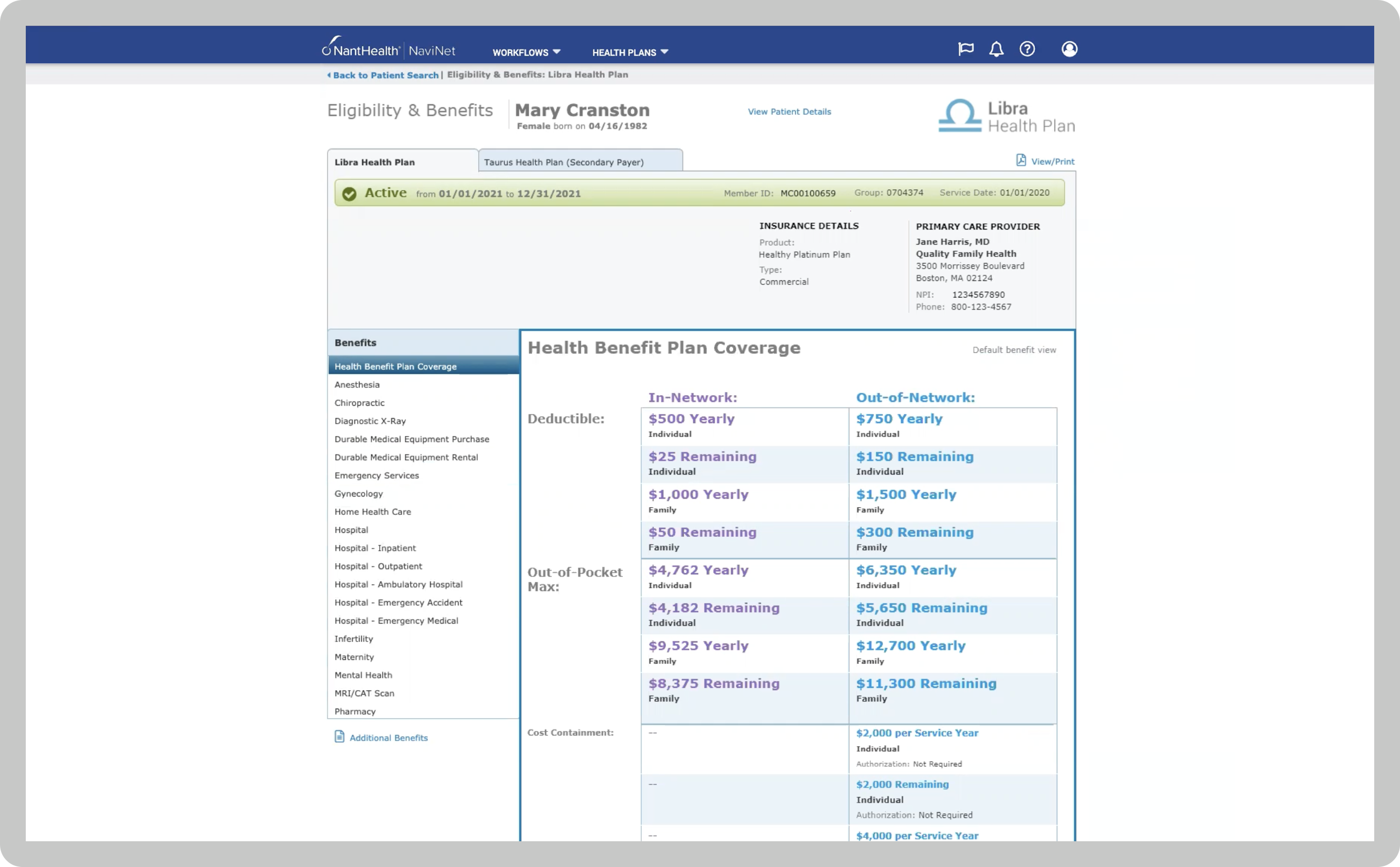
A large view of the main E&B legacy interface.
A large view of the Redesign:
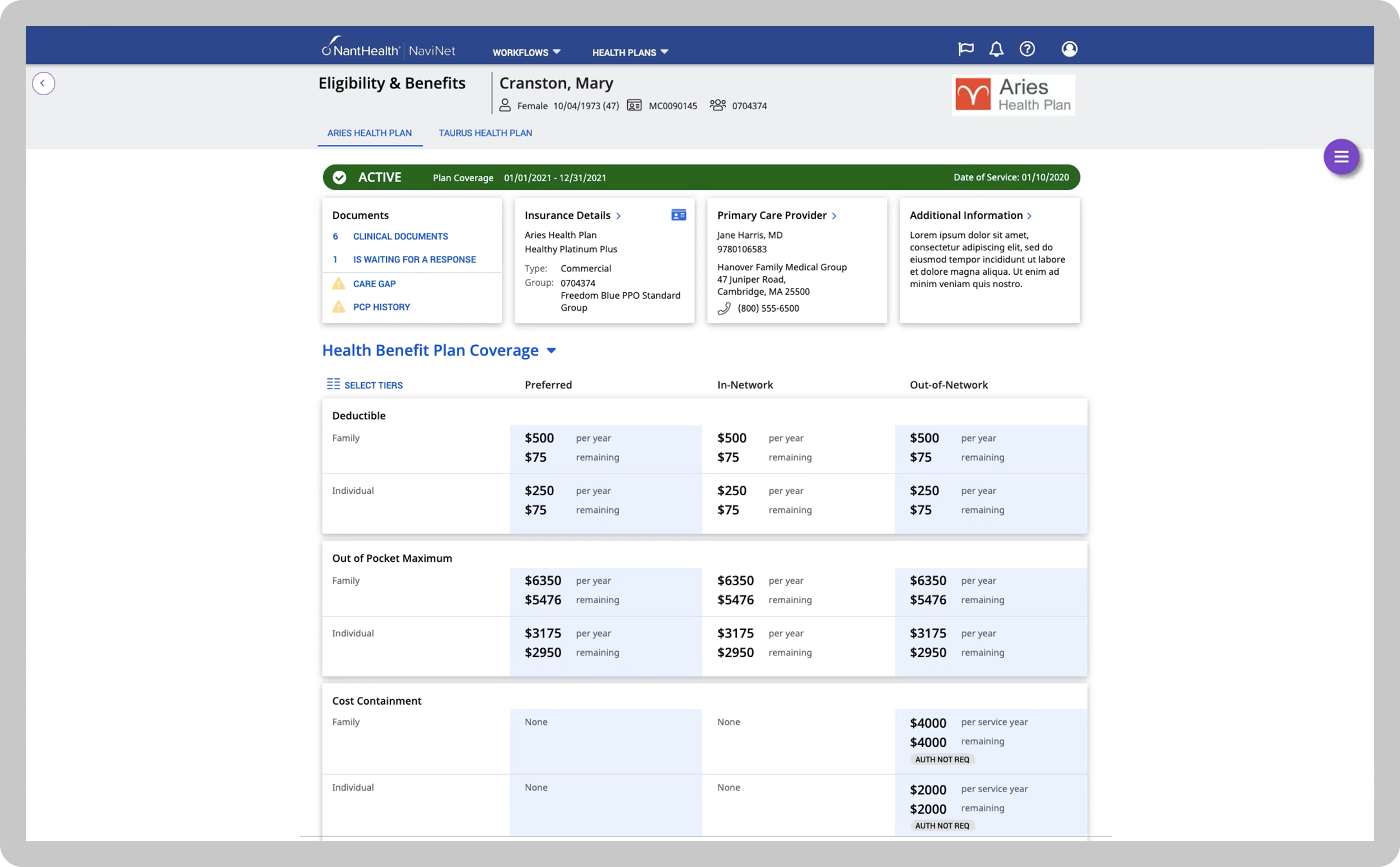
A large view of the redesigned E&B screen in NaviNet Open.
For more redesigned E&B screens, please visit this item in the Portfolio section.